Question Mark
Table of Contents
Question Mark (?) – Exercises
These exercises focus on different types of questions.
When to Use a Question Mark
1. Direct Questions
Use a question mark after a direct question.
Examples:
-
What time does the train leave?
-
Did you finish your homework?
-
Why is the door open?
2. Yes / No Questions
Questions that can be answered yes or no also end with a question mark.
Examples:
-
Do you like ice cream?
-
Is she your teacher?
-
Can they help us?
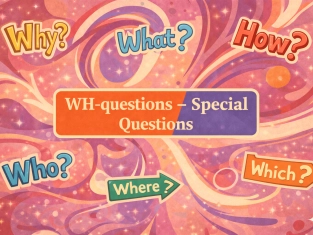
3. Wh-Questions
Questions that begin with what, where, when, why, who, how also use a question mark.
Examples:
-
Who is calling you?
-
How do you cook this dish?
-
When does the store open?
4. Tag Questions
A tag question also ends with a question mark.
Examples:
-
You finished the task, didn’t you?
-
She is coming later, isn’t she?
When NOT to Use a Question Mark
We do not use a question mark in indirect questions.
These are statements, not real questions.
Examples:
-
She asked where the meeting was.
-
I want to know why he left.
Questions with Quotation Marks
If the spoken words are a question, the question mark stays inside the quotation marks.
Example:
-
He asked, “Where is the station?”
If the whole sentence is the question, the question mark goes outside.
Example:
-
Did she really say “I’m leaving”?
Common Mistakes
Incorrect: I wonder where they went?
Correct: I wonder where they went.
Incorrect: Are you ready?
Correct: Are you ready?
Incorrect: Why you are late?
Correct: Why are you late?
Remember:
Use a question mark (?) at the end of a direct question. It shows that someone is asking for information.